
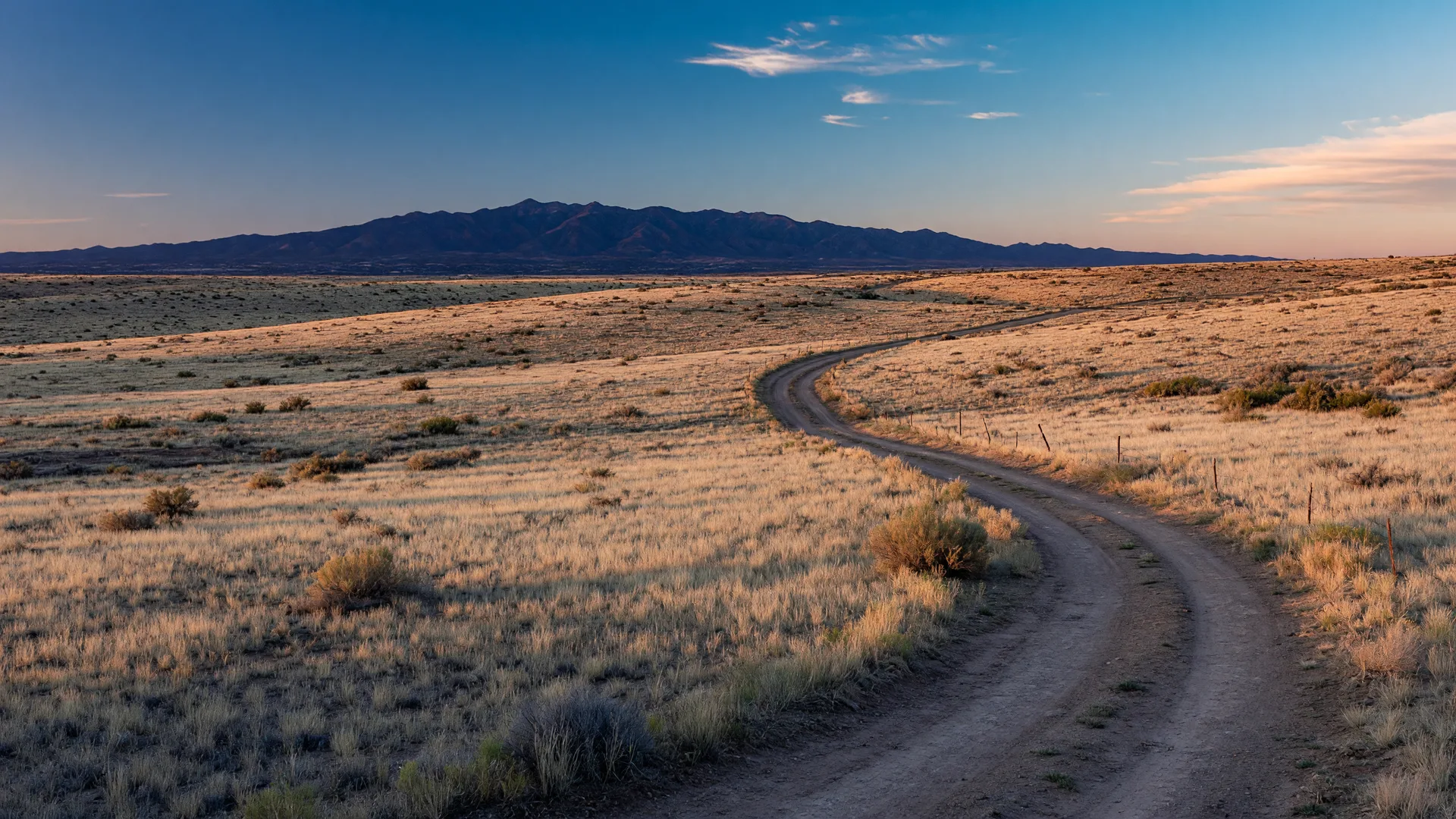
Buying land in Valencia County, New Mexico is one of the most affordable ways to put down roots in the American Southwest. Affordable acreage, sweeping views of the Sandia and Manzano Mountains, and room to build the home you have always wanted draw buyers from across New Mexico and out of state. As an AI Certified Agent with 29 years of experience, I have helped many clients find and purchase land across Los Lunas, Bosque Farms, Peralta, Belen, and the East Mountains.
Land is different from buying a home. It asks you to think about zoning, water rights, wells, septic, access, and utilities in ways a finished house never does. That is not a reason to avoid it. It is a reason to go in informed. This guide walks through everything you need to know to buy land in Valencia County with confidence, from choosing the right parcel to closing on it.
Why Buy Land in Valencia County?
Valencia County sits along the Rio Grande corridor just south of Albuquerque, and it offers land buyers a combination that is hard to find elsewhere. Here is what draws people to this corner of New Mexico.
Affordability compared to other states. Compared to pricey coastal and mountain-west markets, Valencia County land is a genuine bargain. Buyers relocating from states where a bare acre costs a fortune find they can purchase whole parcels here for a fraction of the price. That affordability extends to the homes and the cost of living that follow.
A variety of parcel sizes. Whether you want a half-acre building lot in an established community or a multi-acre ranchette with room for horses, you will find both here. The county offers everything from small residential lots to large rural tracts.
Stunning mountain views. The Sandia Mountains rise to the north and the Manzano Mountains to the east, and many parcels take in those views across open high-desert land. Waking up to that scenery never gets old.
Peaceful rural living near Albuquerque. You can have quiet, wide-open space and still be on Interstate 25, roughly a half hour from downtown Albuquerque. For commuters and remote workers, it is the best of both worlds.
Growing demand and rising land values. Valencia County is one of the fastest-growing parts of New Mexico. Steady population growth, new construction, and the county's proximity to Albuquerque have pushed land values generally upward, which matters whether you plan to hold, build, or resell.
Freedom to build the home you want. Land lets you design a home to fit your land, not the other way around. From a modest adobe-style starter to a custom estate, the parcel is the blank canvas.
Types of Land Available in Valencia County
Valencia County is not one market for land. It is a collection of distinct areas, each with its own character, price range, and what you can realistically do with a parcel. Understanding the difference helps you target the right kind of land for your goals.
Residential Building Lots
These are prepared or semi-prepared parcels meant for a single home, most common in established communities like Los Lunas and Belen. Some lots are already served by utilities such as water, electric, and gas; others require connection. You will find both HOA and non-HOA communities, and the choice affects everything from monthly fees to how freely you can develop your lot.
Raw subdivision lots in outlying areas commonly list for roughly $2,000 to $7,000 per acre, while improved, ready-to-build lots in established villages like Central Los Lunas and Peralta sell for far more. Lot sizes and prices vary widely, so the right comparison is recent sales of similar lots nearby.
Acreage and Ranchette Properties
One-to-ten-acre parcels are particularly popular in Bosque Farms and the rural parts of the county. These ranchettes are where people keep horses, set up small operations, and enjoy real privacy and space. Equestrian-friendly properties with room for horses and riding are a signature of the area, and Bosque Farms prices its premium acreage accordingly.
Acreage brings extra homework. These parcels usually need a well and septic, so you must confirm a legal water source and a septic system that fits the soil and lot size before you commit. The reward is space, quiet, and mountain views that a small lot can never match.
Raw Land and Development Parcels
Larger tracts of raw land appeal to buyers interested in agriculture, grazing, or future development. These parcels typically come with fewer improvements, which means a lower price per acre but more work before they are usable. Development parcels carry real investment potential, but they also demand serious due diligence: zoning, water, access, environmental review, and a clear title all matter.
Grazing and agricultural land may qualify for different valuation and use under county rules. If you are buying raw land to hold or develop, work with a professional who understands these parcels, because the details determine whether the investment works.
Zoning and Land Use Rules in Valencia County
Zoning tells you what you are legally allowed to build on a parcel and where. It is one of the first things to check before you fall for a piece of land, because no amount of enthusiasm will change the county's zoning map.
Valencia County uses a range of zoning classifications that designate how land can be used. Agricultural and residential designations are the two you will most often see on land listings, and they differ in what structures and uses are permitted. A parcel zoned for agricultural use may have different minimum lot sizes and permitted buildings than one zoned residential, and some parcels sit in rural zones with very specific rules.
Building on land in unincorporated Valencia County also means pulling the right permits. The Valencia County Planning and Zoning Department is the place to confirm a parcel's zoning designation, any overlays, and the permitting process for the structure you have in mind. Contacting them early, before you make an offer, can save you from buying a parcel that cannot be built the way you want.
Water Rights and Access: The Most Important Step
In the high desert, water is the difference between land you can build on and land that is only scenery. This is the step where many land buyers run into trouble, so it deserves your full attention.
Understanding Water Rights in New Mexico
New Mexico water law follows the doctrine of prior appropriation, often summarized as "first in time, first in right." Water here is a public resource, and using it requires a legal right. That means you cannot simply pump groundwater or take from a stream because it is on your property. Your right to use water must be established and legally recognized.
There are important differences between surface water rights and groundwater rights, and they are administered differently. In historic communities like Peralta, acequia associations manage surface irrigation water shared among members, with their own rules and traditions. If a parcel has water rights attached, verify with your agent, title company, and the appropriate authorities exactly what those rights allow before you buy.
Wells and Domestic Use
For most rural homes in Valencia County, the practical water answer is a domestic well. In the Rio Grande valley bottom around Belen and Los Lunas, domestic wells commonly tap the shallow alluvial aquifer, typically reaching water at roughly 100 to 160 feet. Moving away from the valley floor, wells must be drilled much deeper.
Drilling a domestic well requires a permit from the New Mexico Office of the State Engineer. The permitting process protects both you and the aquifer. Once drilled, have the water quality tested before you rely on it for your household. Drilling and casing in New Mexico averages around $28 to $65 per foot, and a complete turn-key domestic well with pump, tank, and permit typically runs from about $15,000 to $50,000 depending on depth and conditions.
Well and Septic Requirements
A home needs both water and a way to handle wastewater, which in rural Valencia County usually means a septic system. Septic permitting runs through the county, and a parcel must have enough area and suitable soils to support one. Minimum lot sizes for well and septic are set so that both systems function safely with the required setbacks and separation distances.
On some lots, standard septic is not an option and an alternative system is needed, which adds cost. The price difference between a standard and an alternative system can be significant, so confirm the feasibility and the outlay before you make an offer on a parcel.
Utilities and Infrastructure
A beautiful parcel is only as good as the utilities that serve it. Raw land often has no power, water, or road at the lot line, and the cost of bringing those in can surprise unprepared buyers.
Electricity and Gas
If a parcel is far from existing power lines, running electricity to it can be one of the larger connection costs you face. Getting a quote from the service provider before you buy is part of the due diligence. Connecting to natural gas may not be available in rural areas, where many homes rely on propane instead. For buyers drawn to off-grid living, solar with battery storage is an increasingly practical option across this sunny region.
Internet and Connectivity
Reliable internet matters more than ever, especially for remote workers. Broadband availability varies across rural Valencia County, so check what is actually available at the parcel. Where fixed broadband is limited, Starlink and other satellite services provide a workable connection for many, letting people live on rural land without giving up a remote career.
Roads and Access
You need a legal, practical way to reach your land. Some parcels are served by public roads; others rely on private roads and easements, which can come with maintenance agreements that share the cost among the properties they serve. Poor or unmaintained access can become a real problem in wet weather. Confirm that access is legal, recorded, and passable year-round before you commit.
Financing Land Purchases in New Mexico
Land financing looks different from a traditional home mortgage, and understanding the options ahead of time keeps the process smooth.
Land loans versus construction loans. A land loan finances the purchase of the parcel itself. Because lenders see unimproved land as riskier, land loans usually require higher down payments, often 20 to 30 percent, and carry higher interest rates than a home mortgage. If you intend to build, a construction-to-permanent loan lets you finance the land and the construction together, then convert to a permanent mortgage once the home is complete.
USDA financing. In eligible rural areas of New Mexico, USDA Rural Development loans can help finance a home on a qualifying lot, sometimes with a lower down payment. Qualification depends on location and income, so it is worth checking whether the area you are considering is USDA-eligible.
Owner financing. Some sellers of land offer owner financing, where the seller acts as the lender. Terms vary widely, so have any owner-financing agreement reviewed carefully before signing.
The right financing depends on your timeline, your budget, and whether you plan to build immediately or hold the land. A local lender who understands land transactions is a valuable partner in this part of the process.
The Steps to Buying Land in Valencia County
Buying land is a process with its own rhythm. Here is the path that works well for most buyers.
Define your goals and budget. Know what you want to use the land for, how much you can spend, and what you are willing to invest in wells, septic, and utilities.
Research areas. Compare Los Lunas, Bosque Farms, Peralta, Belen, and the East Mountains to find the setting that fits your lifestyle.
Work with a local agent who knows land. Someone like me who has spent 29 years navigating these rural parcels can flag issues you will not see on a listing.
Check zoning and water early. Confirm what you can build and that a legal water supply is available before you invest in a parcel.
Get a survey and title search. A survey establishes boundaries, and a title search confirms ownership and any easements or liens.
Understand closing costs and process. Land closings carry costs and paperwork of their own, and your title company will guide you through them.
Close and celebrate your new land. With the deed in hand, your build can begin.
Common Mistakes Land Buyers Make
Over my 29 years in New Mexico real estate, I have seen most of these mistakes play out. Knowing them in advance can save you time and money.
- Skipping the water rights check. A parcel without a legal water source is very hard to build on. Verify water rights before you buy.
- Not verifying zoning before purchase. Zoning controls what you can build. Confirm it against your plans early.
- Ignoring septic and well requirements. A lot that cannot support a septic system is effectively unbuildable. Check lot size and soil early.
- Buying without a land survey. Boundary lines are not always where they appear. A survey protects you.
- Not accounting for utility connection costs. Power, water, and road access can cost far more than buyers expect. Get estimates before you commit.
- Skipping the title search. Easements, liens, and access issues can live in the title. Always have it reviewed by a professional.
Land Buying Checklist
Print this list and keep it with you as you look at parcels. It covers the essentials that separate a smooth land purchase from a costly surprise.
- Zoning. Confirm the parcel's zoning matches your intended use with Valencia County Planning and Zoning.
- Water. Verify legal water rights and a viable well or municipal connection.
- Septic. Confirm the lot can support a septic system that meets county requirements.
- Access. Verify legal, recorded, year-round access by public road or easement.
- Utilities. Get real cost estimates for power, water, gas, and internet at the parcel.
- Survey. Commission a land survey to establish exact boundaries.
- Title. Have a title search run and reviewed for easements, liens, and water rights.
- Financing. Arrange land or construction financing and understand down payment and closing costs.
Frequently Asked Questions About Buying Land
How much does an acre of land cost in Valencia County?
There is no single price because land varies by location and by whether a parcel is prepared to build on. Raw residential lots in outlying subdivisions commonly list from roughly $2,000 to $7,000 per acre, while improved, ready-to-build lots in established communities cost significantly more. Los Lunas listings have averaged around $47,000 per acre for improved parcels, and premium acreage in Bosque Farms and Peralta can command far higher prices. The best way to know what a specific parcel is worth is to compare recent sales with a local agent.
Can I build right away on land I buy?
Not always. Before you can build you must confirm that the property is zoned for your intended use, that there is a legal and permitted water supply, and that the lot can support a septic system. A parcel can look buildable yet fail on water or septic. That is why checking zoning, water rights, and lot size for well and septic requirements before you make an offer is the single most important step in buying land.
Do I need water rights to build a home?
Yes. In New Mexico, water is a public resource administered under the doctrine of prior appropriation, so you must have a legal right to use water on your property. For most rural homes this means obtaining a domestic well permit through the New Mexico Office of the State Engineer before drilling. You will also want to confirm how the parcel's water rights are described in the title so there are no surprises after closing.
How deep do I need to drill for water in Valencia County?
In the Rio Grande valley bottom around Belen and Los Lunas, most domestic wells tap the shallow alluvial aquifer, typically reaching water at roughly 100 to 160 feet. Depth varies by location; moving away from the valley floor, wells must go much deeper. Drilling and casing in New Mexico averages around $28 to $65 per foot, and a complete turn-key domestic well with pump, tank, and permit typically runs from about $15,000 to $50,000 depending on depth and conditions.
Can I get a loan to buy land?
Yes, but land financing works differently from a home mortgage. Lenders treat unimproved land as riskier, so land loans usually require higher down payments, often 20 to 30 percent, and carry higher interest rates. If you plan to build, a construction-to-permanent loan lets you finance the land and the build together. In eligible rural areas of Valencia County, USDA loans can help finance a home on a qualifying lot. Owner financing is another option on some parcels.
What are the property taxes on land in Valencia County?
New Mexico generally has relatively low property taxes, and land that is not yet improved typically carries a lower tax burden than a completed home. The county assessor sets values and the local mill levy determines the final bill, so the exact amount depends on the parcel and its location. Your title company and the Valencia County Assessor can provide the specific figure for any lot you are considering.
Ready to Find Your Land?
Buying land in Valencia County, New Mexico is an exciting step, and it does not have to feel overwhelming. The key is going into it with the right information and the right partner. Whether you are looking for a small building lot in Los Lunas, a horse property in Bosque Farms, acreage near Belen, or a mountain parcel in the East Mountains, I would love to help you navigate the process.
I have spent 29 years helping New Mexico buyers find the right land, check the details that matter including water, zoning, and access, and close with confidence. As an AI Certified Agent, I bring both that experience and the latest tools to the search. Let us talk about your goals and find the parcel that is the right fit for you.
Harriett Taylor, AI Certified Real Estate Agent


Harriett Taylor, Associate Broker, License #35250. Altura Real Estate, 601 Main Street SE, Los Lunas, NM 87031. Equal Housing Opportunity. Land values and well costs are approximate, drawn from public listing and state geology sources, and are subject to change. Always verify zoning, water rights, well, septic, and utility details with the appropriate authorities for any specific parcel.